

Food safety is not just a regulatory requirement; it is a commitment to protecting consumers and safeguarding your brand. For facilities in the food, pharmaceutical and natural product industries, understanding and implementing HACCP Hazard Analysis and Critical Control Points is essential.
At Microbiotech, we have seen how a well-designed HACCP program, combined with effective food manager training, can prevent contamination, ensure compliance and build consumer trust. In this comprehensive guide, we will break down the fundamentals of HACCP, explore how critical control points function and discuss strategies for training your team to uphold the highest standards of food safety.
What is HACCP and Why It Matters
HACCP is a systematic approach designed to prevent food safety hazards before they occur. Rather than reacting to contamination incidents, HACCP emphasizes prevention by identifying potential hazards, evaluating risks and establishing controls to mitigate them.
The primary goal of HACCP is to protect consumers from biological, chemical and physical hazards that could compromise food safety. Biological hazards include bacteria, viruses and molds, while chemical hazards may involve cleaning chemicals or allergens; physical hazards encompass foreign objects such as metal or glass.
Implementing HACCP is more than a compliance exercise; it is a way to safeguard your products, maintain brand reputation and avoid costly recalls. Facilities that adopt HACCP see fewer contamination incidents, smoother audits and increased confidence among regulators, customers and staff.
Food safety HACCP programs are recognized globally as the gold standard and regulatory authorities expect facilities to integrate these practices into everyday operations.
The Seven Principles of HACCP
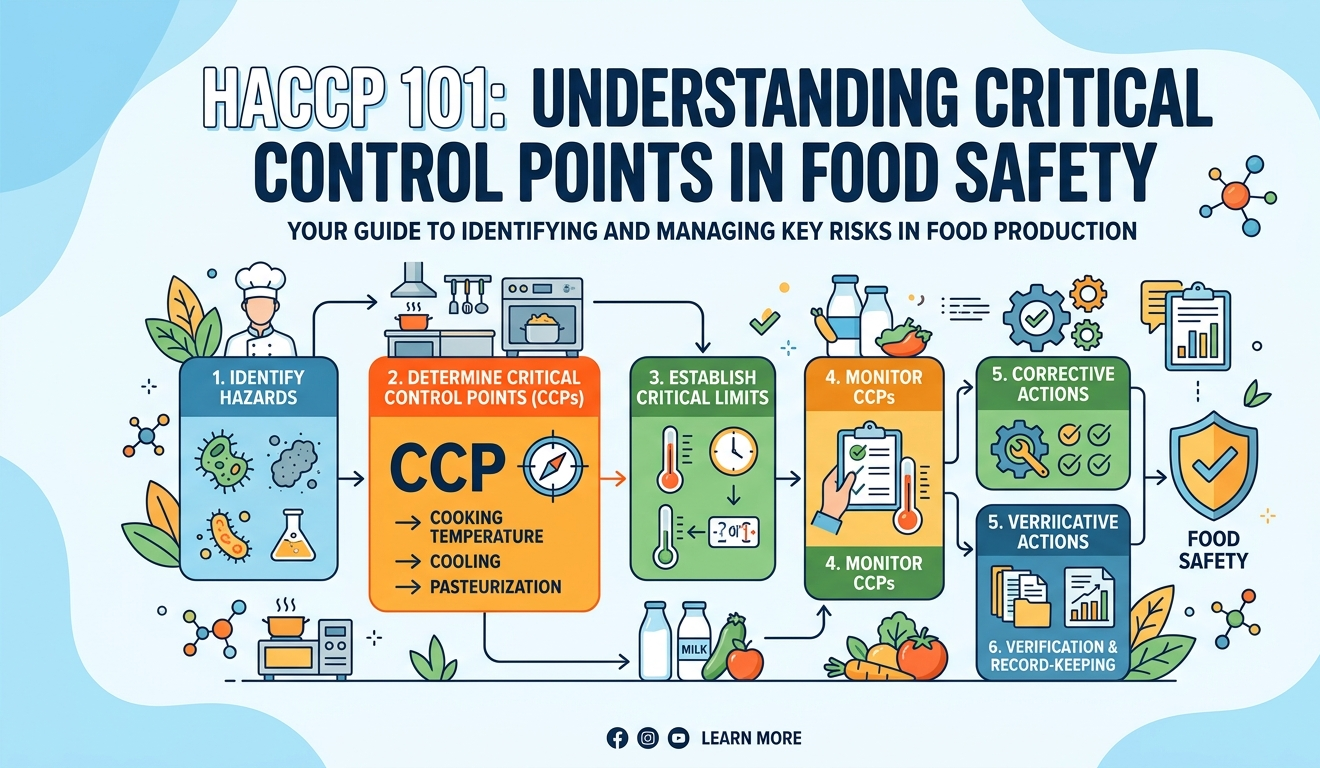
HACCP is structured around seven key principles, each building on the others to create a comprehensive safety management system. Understanding these principles is crucial for designing and maintaining effective programs.
1. Conduct a Hazard Analysis
Every HACCP plan starts by identifying potential hazards in your processes. This involves reviewing raw materials, processing steps, storage and distribution. Hazards can range from microbial contamination to chemical residues and identifying them allows facilities to take proactive measures.
2. Determine Critical Control Points (CCPs)
CCPs are points in the process where controls can be applied to prevent, eliminate or reduce hazards to safe levels. For example, cooking, cooling or pasteurization steps often serve as CCPs.
3. Establish Critical Limits
For each CCP, facilities define measurable limits, such as time, temperature, pH or concentration. Exceeding these limits signals that corrective actions are needed to maintain food safety.
4. Monitor CCPs
Monitoring involves regularly checking critical control points to ensure compliance with established limits. Continuous monitoring helps catch deviations early, preventing unsafe products from reaching consumers.
5. Establish Corrective Actions
If monitoring indicates that a CCP is out of control, predefined corrective actions must be taken immediately. These actions ensure that hazards are addressed and the process returns to safe operation.
6. Verify the HACCP System
Verification ensures that your HACCP program is functioning as intended. This may involve audits, microbial testing and reviewing records. Verification provides confidence that your food safety system is effective.
7. Maintain Documentation and Records
Documentation is essential for accountability and compliance. Records of monitoring, corrective actions and verification activities demonstrate that your facility adheres to food safety HACCP principles and can support audits.
These seven principles provide a structured, risk-based framework that protects consumers while streamlining operations for compliance and efficiency.
Understanding Critical Control Points (CCPs)
Critical Control Points are the backbone of HACCP. They represent the stages in production where intervention can effectively prevent or reduce hazards. Understanding CCPs is essential for designing a robust food safety program.
CCPs are identified through a hazard analysis, which examines each step of the process from raw material reception to final product storage. Not every step is a CCP; only those where control is necessary to prevent a significant risk qualify as a CCP.
Examples of common CCPs include:
- Cooking or pasteurization temperatures in food production
- Metal detection or screening for foreign objects
- Cooling or refrigeration to prevent bacterial growth
- Chemical dosing to neutralize contaminants
Monitoring CCPs ensures that these critical points remain within established limits. Deviations require immediate action, such as adjusting temperatures or halting production. Without proper identification and monitoring of CCPs, even the most advanced food safety programs can fail.
The Role of Food Manager Training in HACCP Success
Even the best-designed HACCP system will fail without competent personnel. That is where food manager training becomes critical. Well-trained managers understand the principles of HACCP, can identify hazards and ensure that CCPs are effectively monitored and maintained.
Training programs typically cover:
- The fundamentals of HACCP and risk-based thinking
- Identifying hazards and CCPs
- Monitoring procedures and corrective actions
- Record-keeping and documentation standards
- Regulatory requirements and audit preparation
Microbiotech’s online and onsite food manager training programs combine theory with hands-on practice. Employees learn not only how to follow procedures, but also why each step is important. This understanding empowers teams to act proactively, reducing the risk of contamination and audit failures.
Facilities that invest in comprehensive training also see improved employee engagement and a stronger safety culture. Managers and staff are more confident in their roles, ensuring that food safety HACCP principles are embedded in daily operations.
Common Hazards Addressed by HACCP
Understanding the types of hazards that HACCP targets is key to designing effective control measures.
Biological Hazards
These include bacteria, viruses, molds and parasites that can cause foodborne illnesses. Examples are Salmonella, Listeria monocytogenes and E. coli. Biological hazards are often controlled through temperature management, proper cooking and sanitation procedures.
Chemical Hazards
These hazards involve harmful substances that may contaminate food, such as cleaning chemicals, pesticides, allergens or food additives. Proper storage, labeling and handling, combined with validated cleaning and sanitizing procedures, help mitigate these risks.
Physical Hazards
Physical hazards include foreign objects like metal shards, glass fragments or plastic pieces. Detection methods such as metal detectors, sieves and visual inspections serve as CCPs to prevent contaminated products from reaching consumers.
By systematically identifying and controlling these hazards, HACCP ensures that facilities consistently produce safe, high-quality products.
Documenting HACCP for Compliance and Audits
Documentation is a cornerstone of HACCP compliance. Auditors and regulators require evidence that your facility is actively monitoring hazards and controlling risks.
Effective documentation includes:
- HACCP plans detailing CCPs and critical limits
- Monitoring logs with dates, times and results
- Records of corrective actions taken during deviations
- Verification reports, including microbial testing or equipment calibration
Proper documentation serves multiple purposes. It demonstrates regulatory compliance, helps identify trends and recurring issues and supports continuous improvement. Microbiotech assists clients in creating user-friendly, audit-ready documentation that aligns with international standards and regulations.
Integrating HACCP with Cleaning and Sanitizing Programs
HACCP and cleaning and sanitizing programs go hand-in-hand. Without a strong foundation in hygiene, CCPs cannot function effectively. Contaminated surfaces, equipment or storage areas can compromise critical control points, even if monitoring and procedures are otherwise flawless.
Cleaning and sanitizing ensure that microbial loads are minimized, preventing cross-contamination and supporting hazard control. Facilities that combine robust cleaning sanitizing programs with HACCP principles experience fewer non-conformities and improved audit outcomes.
At Microbiotech, we help organizations integrate cleaning and sanitizing into HACCP programs, validate effectiveness through microbiological analysis and provide training to ensure staff understand both hygiene and hazard control requirements.
Benefits of Implementing HACCP Effectively
Facilities that implement HACCP correctly enjoy multiple benefits:
1. Enhanced Food Safety
Preventive controls reduce the risk of contamination and foodborne illness.
2. Regulatory Compliance
Well-documented HACCP programs simplify audits and satisfy local and international regulatory requirements.
3. Operational Efficiency
Identifying hazards and CCPs streamlines processes, reduces waste and minimizes corrective actions.
4. Brand Protection
Consistently safe products enhance consumer trust and strengthen market reputation.
5. Employee Engagement
Trained staff are empowered to actively participate in maintaining food safety standards.
Case Studies: How HACCP and Food Manager Training Prevent Failures
Across industries, facilities that combine HACCP with proper food manager training achieve better outcomes. For instance:
- A ready-to-eat food manufacturer reduced microbial incidents by 40% after integrating CCP monitoring with a structured training program.
- A cosmetic production facility avoided regulatory citations by documenting cleaning and sanitizing procedures in conjunction with HACCP controls.
- Restaurants and catering services improved audit scores after implementing practical, hands-on food safety HACCP training for all managers.
These examples illustrate how investing in education, monitoring and validation pays off in reduced risks, improved compliance and safer products.
How Microbiotech Supports HACCP Implementation
Microbiotech offers comprehensive services to help organizations build and maintain effective HACCP programs:
- HACCP Consulting: Tailored plans that identify hazards, establish CCPs and ensure compliance with GFSI and local regulations.
- Food Manager Training: Online and onsite courses designed to empower managers with practical knowledge and skills.
- Microbiological Analysis: Validates cleaning and sanitizing programs, supporting hazard control and audit readiness.
- Documentation and SOP Support: Ensures all procedures and records are accurate, accessible and audit-compliant.
By combining science, expertise and practical solutions, Microbiotech ensures that HACCP programs are effective, sustainable and fully integrated into operations.
Conclusion
Understanding HACCP and critical control points is essential for any facility that produces food, pharmaceuticals, cosmetics or natural health products. When paired with effective food manager training and validated cleaning and sanitizing programs, HACCP becomes a powerful preventive tool.
Facilities that invest in HACCP not only comply with regulations but also protect consumers, enhance brand reputation and reduce operational risks. Microbiotech is here to guide organizations through every step of HACCP implementation, from hazard analysis to training, microbiological validation and documentation.
By embracing HACCP as part of a broader food safety culture, your organization can achieve long-term success, consistent compliance and most importantly, safer products for your customers.