

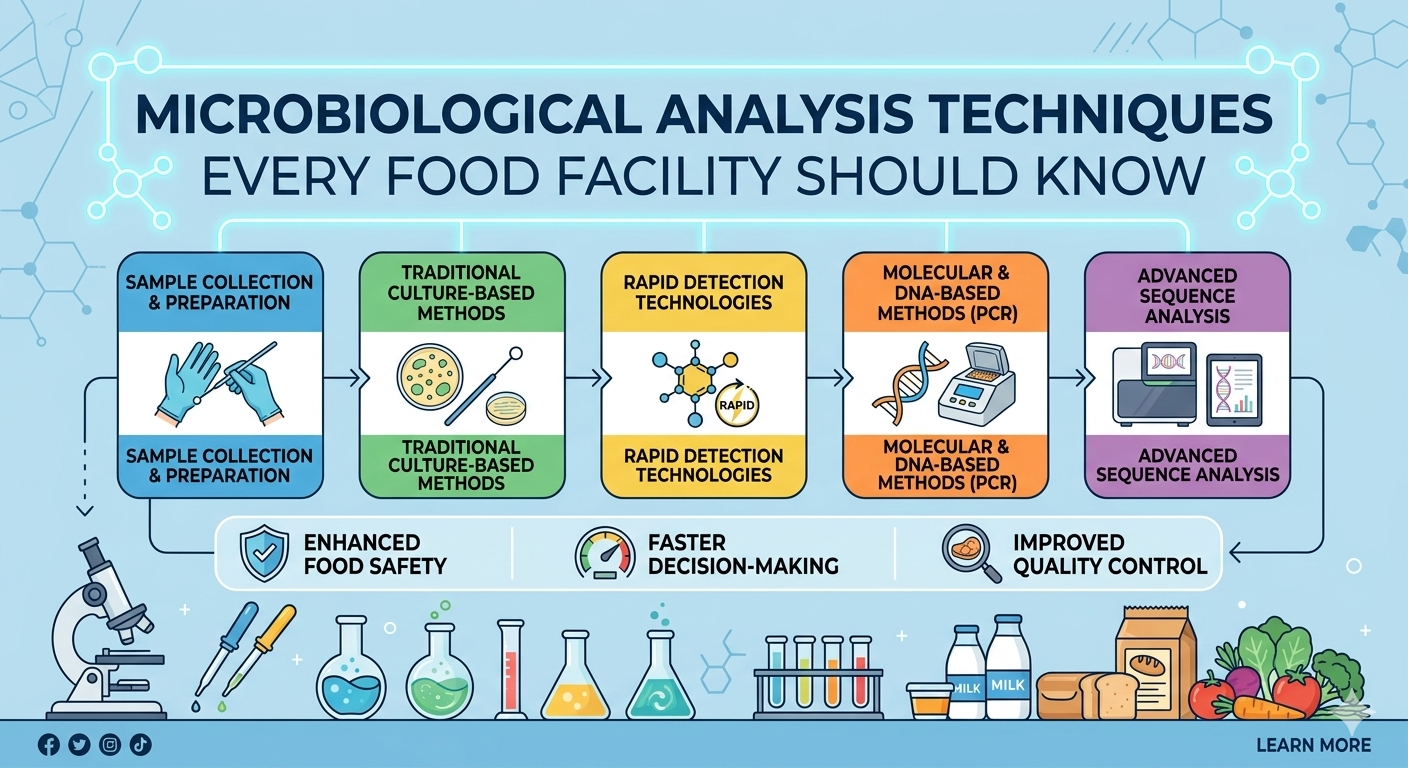
Ensuring food safety is a top priority for all food manufacturers, processors and distributors. Contamination can occur at any stage of production, from raw materials to finished products, posing risks to consumers and your brand. That is why microbiological food testing is essential.
At Microbiotech, we help organizations understand, implement and optimize their microbiological lab processes to ensure safe, high-quality products. In this blog, we will explore the most important microbiological analysis techniques that every food facility should know, why they matter and how they can protect your business from contamination, regulatory penalties and recalls.
Why Microbiological Analysis Matters in Food Safety
Microbiological analysis is the cornerstone of modern food safety. It involves testing products, ingredients, surfaces and environments for the presence of harmful microorganisms, including bacteria, yeasts, molds and viruses.
Without proper testing, even the cleanest facility can unintentionally distribute contaminated products. Microbial contamination is responsible for numerous foodborne illnesses each year, which can lead to recalls, audit failures and damage to brand reputation.
By investing in a microbiological lab, food facilities can:
- Detect pathogens early to prevent contamination
- Verify cleaning and sanitizing protocols
- Validate HACCP and GFSI compliance
- Monitor trends in microbial growth for continuous improvement
Moreover, microbiological food testing is not just about compliance; it is about building consumer trust. Customers expect safe products and rigorous testing demonstrates a commitment to quality and safety.
Types of Microbiological Analysis in Food Facilities
There are several types of microbiological analysis that food facilities rely on to ensure safety. Each method serves a unique purpose and is selected based on the product type, risk profile and regulatory requirements.
1. Pathogen Detection
Pathogen detection tests target harmful microorganisms, including Salmonella, Listeria monocytogenes, E. coli and Staphylococcus aureus. These pathogens can cause severe illness, particularly in high-risk populations like children, the elderly and immunocompromised individuals.
Pathogen testing often involves culturing samples in selective media, followed by biochemical or molecular confirmation to verify the presence of the pathogen. Rapid detection methods, such as polymerase chain reaction (PCR), are increasingly used to provide faster results without compromising accuracy.
2. Total Plate Count (TPC) or Aerobic Plate Count
TPC measures the total number of viable bacteria present in a food sample. While it does not identify specific pathogens, it provides an overall picture of microbial load, helping facilities assess the general hygiene and microbial quality of raw materials, processing environments and finished products.
3. Yeast and Mold Analysis
Yeasts and molds can spoil food products, particularly those with high sugar content or high moisture levels. They can also produce mycotoxins, which are harmful to consumers. Microbiological analysis for yeast and molds is essential for baked goods, beverages, dairy products and sauces.
4. Indicator Organisms
Certain bacteria, like coliforms or Enterobacteriaceae, serve as indicators of hygiene and potential contamination. While they may not always cause illness, their presence signals that sanitation protocols may be insufficient, requiring corrective action.
By incorporating these types of microbiological analysis, facilities gain a complete understanding of their microbial risks and can implement effective preventive measures.
How Microbiological Labs Operate
A professional microbiological lab is more than just a room with petri dishes. It is a highly controlled environment where samples are carefully collected, prepared, tested and analyzed according to stringent protocols.
Sample Collection and Preparation
Accurate microbiological food testing begins with proper sampling. This includes taking representative portions of raw materials, in-process products, finished goods and environmental surfaces. Poor sampling can result in misleading results, even if the lab’s techniques are flawless.
Once collected, samples are prepared in the lab using sterile techniques to avoid cross-contamination. Depending on the analysis, this may involve homogenization, dilution or enrichment to ensure pathogens are detectable.
Testing and Incubation
Samples are introduced into selective media or testing systems that encourage the growth of target organisms while inhibiting the growth of other organisms. They are then incubated under controlled conditions, such as specific temperatures, humidity or anaerobic environments, depending on the microorganism being analyzed.
Identification and Quantification
After incubation, colonies are counted, observed and identified using biochemical, molecular or immunological methods. Modern microbiological labs often utilize advanced technologies, such as PCR, ELISA or automated systems, for rapid and accurate detection.
Reporting and Interpretation
Results are documented and interpreted in the context of regulatory standards, client specifications and HACCP requirements. A well-prepared report highlights potential risks, trends and recommendations for corrective action.
Advanced Microbiological Analysis Techniques
While traditional plate counts remain common, many food facilities now rely on advanced microbiological analysis techniques to enhance speed, accuracy and reliability.
1. Polymerase Chain Reaction (PCR)
PCR amplifies DNA segments of pathogens, allowing for rapid and highly sensitive detection. It can identify specific microorganisms even in low concentrations, which is crucial for ready-to-eat products and high-risk foods.
2. Immunoassays (ELISA)
Enzyme-linked immunosorbent assays detect specific microbial antigens using antibodies. They are particularly useful for detecting allergens and rapidly screening for pathogens such as Salmonella or Listeria.
3. Next-Generation Sequencing (NGS)
NGS allows for a detailed genetic analysis of microbial populations in food and processing environments. It can identify unknown pathogens, track contamination sources and provide insights for preventive measures.
4. ATP Bioluminescence Testing
ATP testing provides rapid results by detecting organic residues, which can indicate contamination or inadequate cleaning. While not a replacement for pathogen testing, it helps validate the effectiveness of cleaning and sanitizing in real-time.
These advanced techniques are increasingly integrated into modern microbiological labs to improve risk management and ensure food safety compliance.
The Role of Microbiological Testing in HACCP Programs
HACCP or Hazard Analysis and Critical Control Points, relies on identifying, monitoring and controlling hazards throughout the food production process. Microbiological food testing plays a critical role in HACCP compliance.
- Validation of CCPs: Microbiological analysis confirms that cooking, cooling and other critical steps effectively eliminate pathogens.
- Monitoring of Prerequisite Programs: Tests ensure that sanitation, water quality and employee hygiene are adequate to prevent contamination.
- Trend Analysis: Regular testing helps identify recurring risks, allowing managers to adjust processes proactively.
By integrating laboratory testing into HACCP plans, facilities can demonstrate compliance during audits and proactively reduce the risk of foodborne illnesses.
Environmental Monitoring and Microbiological Analysis
A key component of effective food safety is environmental monitoring. This involves testing surfaces, equipment, air and water in the facility to detect microbial contamination before it reaches products.
- Surface Swabs: Testing high-touch areas, equipment and drains identifies potential contamination sources.
- Air Sampling: Detects airborne microbes in clean rooms or processing areas.
- Water Testing: Ensures that water used in production or cleaning meets microbial safety standards.
Environmental monitoring programs, combined with microbiological lab analysis, enable facilities to validate cleaning procedures, identify hotspots and continually improve hygiene practices.
Common Challenges in Microbiological Food Testing
While microbiological testing is essential, food facilities often face challenges:
1. Sample Handling Errors
Improper collection, storage or transport can compromise results, highlighting the need for trained personnel.
2. Turnaround Time
Traditional methods, such as plate counts, require incubation, which can delay corrective action. Advanced techniques such as PCR help reduce turnaround time.
3. Interpreting Results
Understanding the significance of microbial counts in relation to product safety, regulatory limits and HACCP is crucial. Misinterpretation can lead to unnecessary waste or overlooked risks.
4. Keeping Up With Regulations
Food safety standards evolve. A reliable microbiological lab must stay current with HACCP, GFSI and ISO requirements to ensure compliance.
Microbiotech addresses these challenges by combining advanced technology, expert staff and consultation services tailored to each client’s needs.
Choosing the Right Microbiological Lab for Your Facility
Selecting a reliable microbiological lab is crucial for accurate testing and compliance. Consider the following factors:
- Accreditation and Certification: Ensure the lab meets ISO or other recognized standards.
- Expertise Across Product Types: From food and beverages to cosmetics and pharmaceuticals, experience matters.
- Range of Testing Services: The lab should offer pathogen detection, yeast/mold testing and environmental monitoring.
- Turnaround Time: Faster results help facilities respond quickly to potential risks.
- Training and Consultation: Labs that offer staff training and HACCP guidance add significant value.
Microbiotech provides all these services, combining cutting-edge lab techniques with practical guidance to support food safety HACCP programs.
Benefits of Microbiological Food Testing for Your Facility
Regular microbiological analysis delivers several key benefits:
1. Protects Consumers
Identifying and mitigating microbial risks reduces the likelihood of foodborne illness.
2. Supports Compliance
Validated testing ensures alignment with HACCP, GFSI and ISO standards.
3. Prevents Recalls
Early detection of pathogens prevents contaminated products from reaching the market.
4. Improves Operational Efficiency
Testing results can guide cleaning, sanitation and process improvements, reducing waste and downtime.
5. Builds Brand Reputation
Consumers and clients trust facilities that demonstrate commitment to rigorous safety testing.
How Microbiotech Supports Facilities with Microbiological Analysis
At Microbiotech, we help food facilities integrate advanced microbiological food testing into their safety programs:
- Comprehensive Lab Services: Pathogen detection, total plate counts, yeast and mold testing and environmental monitoring.
- HACCP and GFSI Integration: Testing supports validation of critical control points and compliance requirements.
- Training Programs: Equip staff with knowledge on sampling, testing procedures and interpreting results.
- Consultation and Reporting: Expert guidance on risk mitigation and data-driven improvements.
Our goal is to empower facilities to maintain the highest standards of safety, compliance and operational excellence.
Conclusion
A modern microbiological lab is essential for any facility serious about food safety. By incorporating microbiological analysis into daily operations, facilities can detect hazards early, validate HACCP programs and prevent contamination.
From pathogen detection to environmental monitoring, microbiological food testing provides actionable insights that protect consumers, maintain compliance and safeguard brand reputation. With Microbiotech’s expertise, facilities gain access to advanced lab techniques, staff training and regulatory guidance that turn testing data into proactive safety measures.
Investing in microbiological analysis isn’t just about meeting standards; it is about building a culture of safety, ensuring that every product leaving your facility is safe, high-quality and trusted by consumers.